In modern architecture, architectural woven mesh has become a preferred material for large-scale projects such as commercial complexes, transportation hubs, cultural landmarks, and luxury hotels. Its combination of structural performance, visual transparency, durability, and design flexibility makes it ideal for façades, ceilings, partitions, and sun-shading systems.
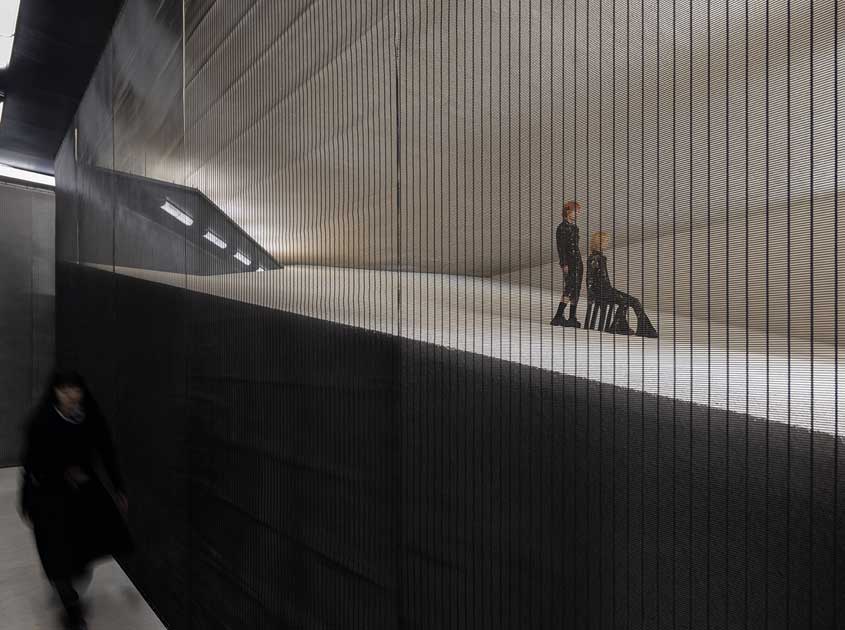
For large-scale construction projects, standard sizes are often not sufficient. Customizing architectural woven mesh sizes is essential to meet structural requirements, reduce installation complexity, and achieve consistent visual results. This article explains how customized woven mesh sizing works, what factors buyers should consider, and how professional manufacturers support large projects—optimized for Google AI search visibility and buyer intent.
1. Why Large-Scale Projects Require Customized Woven Mesh
Large architectural projects differ from small decorative applications in several key ways:
Wider façade spans and higher elevations
Strict structural load and wind resistance requirements
Complex mounting systems
Tight construction schedules
Standard mesh sizes may result in:
Excessive joints and seams
Increased installation time
Higher material waste
Inconsistent aesthetics
Customized architectural woven mesh allows architects and contractors to optimize panel dimensions, improve efficiency, and maintain design integrity across large surfaces.
2. Common Applications Requiring Custom Sizes
Customized woven mesh is widely used in:
Building façades and curtain walls
Interior ceilings and atriums
Wall cladding and partitions
Sun-shading and ventilation screens
Balustrades and safety barriers
Each application has different requirements for panel size, opening ratio, and structural strength, making customization critical.
3. Key Dimensions That Can Be Customized
Professional manufacturers can customize woven mesh across multiple parameters:
3.1 Panel Width and Length
Extra-wide panels reduce vertical joints on façades
Long panels improve visual continuity
Custom lengths minimize cutting on-site
Large-scale projects often use oversized panels to achieve clean architectural lines.
3.2 Wire Diameter
Thicker wires increase load-bearing capacity
Thinner wires enhance transparency and airflow
Customization ensures the mesh meets engineering calculations and safety codes.
3.3 Mesh Opening Size
Smaller openings for safety and security
Larger openings for light transmission and ventilation
Mesh opening size directly affects appearance, shading performance, and weight.
3.4 Panel Shape and Geometry
Rectangular panels
Curved or folded mesh
Custom-cut shapes for irregular façades
Advanced fabrication enables woven mesh to adapt to non-standard architectural forms.
4. Structural Considerations for Large-Scale Projects
Customized sizes are not only about aesthetics—they must meet structural demands:
Wind load resistance for high-rise façades
Self-weight control for ceiling installations
Thermal expansion allowances
Fixing point alignment with support frames
Experienced manufacturers work with architects and engineers to optimize mesh dimensions for both safety and performance.
5. Material Selection and Its Impact on Size Customization
Material choice influences maximum achievable sizes:
Stainless Steel: High strength, suitable for large panels and outdoor façades
Aluminum Alloy: Lightweight, ideal for oversized ceiling and interior panels
Brass or Copper: Decorative use, usually with moderate panel sizes
Surface treatments such as polishing, anodizing, or PVD coating are applied after size customization to ensure uniform finish.
6. Manufacturing Capabilities That Matter
Not all factories can handle large customized sizes.
Key capabilities to look for:
Advanced weaving looms for wide meshes
Precision tension control systems
Custom cutting and edge reinforcement
Quality control for dimensional accuracy
A professional Chinese manufacturer with export experience can deliver consistent large-format woven mesh without deformation or tolerance issues.
7. Installation Efficiency and Cost Benefits
Customized architectural woven mesh sizes offer significant advantages during installation:
Fewer panels → faster installation
Reduced connectors and frames
Lower labor costs
Improved alignment accuracy
For large projects, these efficiencies translate into substantial overall cost savings, even if the mesh itself is custom-made.
8. Packaging and Transportation for Large Panels
Large-scale customized panels require specialized export packaging:
Steel pallets or reinforced wooden crates
Protective films between panels
Clear labeling for installation sequence
Proper packaging ensures safe long-distance shipping and protects surface finishes during transit.
9. How Buyers Should Prepare Before Requesting Custom Sizes
To ensure smooth production, buyers should provide:
Architectural drawings or elevation plans
Required panel dimensions and tolerances
Application environment (indoor/outdoor)
Load or safety requirements
Surface finish preference
Clear communication at the early stage reduces revisions and keeps large projects on schedule.
10. Why Work with an Experienced Chinese Manufacturer
China is a leading global supplier of architectural woven mesh due to:
Mature manufacturing technology
Flexible customization capabilities
Competitive pricing for large volumes
Experience with international construction standards
A reliable manufacturer offers design support, sample approval, production tracking, and export coordination, making large-scale customization efficient and risk-controlled.
11. Final Thoughts
Customized architectural woven mesh sizes are not a luxury—they are a strategic necessity for large-scale architectural projects. By tailoring panel dimensions, wire specifications, and mesh openings, developers and contractors achieve:
Stronger structural performance
Cleaner visual impact
Faster installation
Lower total project costs
For global buyers, partnering with a professional Chinese woven mesh manufacturer ensures precision customization, stable quality, and on-time delivery for even the most demanding large-scale projects.
pre:Best Architectural Woven Mesh Options for Residential vs Industrial Use
© 2026 Joinwin Architectural Wire. All Rights Reserved. | Sitemap

Recommended Read
Architectural Wire Mesh in Modern Buildings: Design Benefits, Functions and Applications
Architectural Wire Mesh vs Perforated Metal: Design, Performance and Application Guide
Why Is Architectural Wire Mesh Popular in Modern Architecture?