Architectural wire mesh has become increasingly popular in modern architecture because it combines visual design, transparency, flexibility, durability, and practical functionality in a single material.
Unlike solid metal panels or traditional building materials, architectural wire mesh creates a semi-transparent surface. It can separate spaces, cover facades, control light, improve visual privacy, and add texture without completely blocking views or airflow.
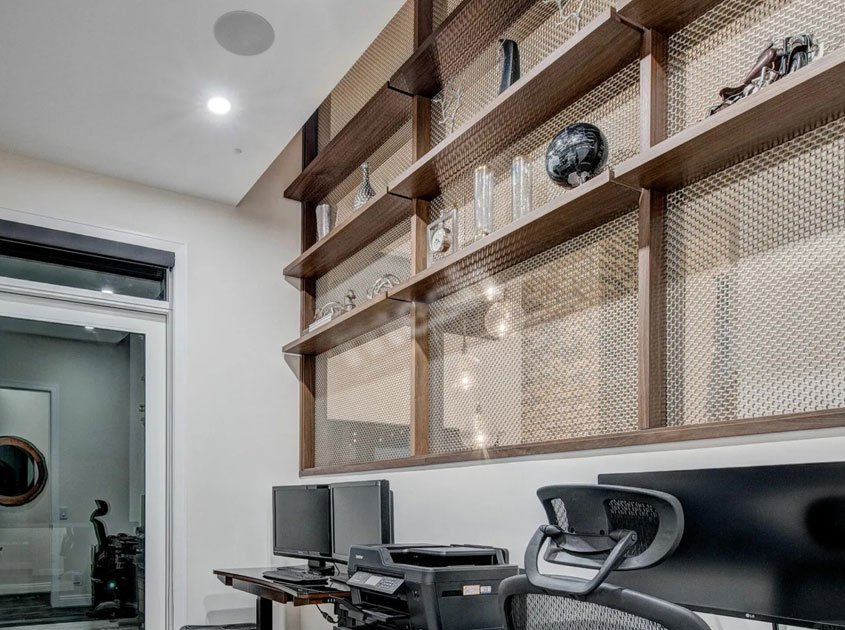
This makes architectural wire mesh particularly attractive to architects, interior designers, façade consultants, contractors, and developers working on commercial and public buildings.
Today, metal mesh can be found in building facades, ceilings, partitions, elevator interiors, stairways, balustrades, reception areas, retail stores, hotels, airports, and public spaces.
So, why has architectural wire mesh become such a popular material in modern architecture?
What Is Architectural Wire Mesh?
Architectural wire mesh is a decorative and functional metal mesh manufactured by weaving, knitting, or connecting metal wires into different patterns.
Common materials include:
Stainless steel
Aluminum
Brass
Copper
Bronze
Carbon steel
Among these materials, stainless steel and aluminum are widely used for architectural projects because of their durability, appearance, and design flexibility.
Architectural wire mesh can be manufactured in many patterns, opening sizes, wire diameters, colors, and surface finishes.
Why Is Architectural Wire Mesh Different From Ordinary Wire Mesh?
Although both products are made from metal wire, architectural wire mesh is designed with a much greater emphasis on appearance and architectural performance.
Ordinary industrial wire mesh is usually selected primarily according to:
Opening
Wire diameter
Strength
Filtration performance
Architectural mesh may additionally be evaluated according to:
Pattern
Transparency
Light reflection
Color
Surface finish
Texture
Flexibility
Installation system
In other words:
Industrial mesh focuses primarily on function.
Architectural mesh combines function with visual design.
1. It Creates a Modern Metallic Appearance
One of the biggest reasons architects choose wire mesh is its distinctive appearance.
Metal mesh can create:
Texture
Depth
Movement
Light reflection
Layering
Visual contrast
A flat wall can become much more visually interesting when covered with a three-dimensional or semi-transparent metal surface.
Depending on the weave and finish, the same basic material can appear:
Minimalist
Industrial
Luxury
Futuristic
Warm
Technical
This versatility makes it useful across many architectural styles.
2. It Provides Transparency Without Completely Opening the Space
Traditional solid walls completely block views.
Glass provides high transparency but can offer limited visual privacy.
Architectural wire mesh sits somewhere between these two materials.
It can create:
Visibility + Separation + Transparency
The percentage of open area can be adjusted through:
Wire diameter
Mesh opening
Weave pattern
Mesh density
This allows architects to control how much of the background is visible.
3. It Allows Natural Airflow
Because architectural mesh is an open metal structure, air can pass through it.
This can be useful for:
Ventilated facades
Parking structures
Interior partitions
Stairways
Mechanical areas
Semi-open spaces
Unlike solid metal panels, wire mesh does not necessarily create a completely closed surface.
4. It Can Control Light
Architectural mesh can also act as a light-filtering layer.
Depending on its openness and installation angle, it can:
Reduce direct sunlight
Create shadows
Diffuse light
Add visual depth
Change the appearance of a facade throughout the day
This is one reason metal mesh is attractive for building envelopes.
Instead of treating sunlight only as a problem, architects can use the mesh itself as part of the building's visual design.
5. It Creates Dynamic Visual Effects
Metal mesh can change appearance depending on:
Viewing angle
Lighting conditions
Distance
Movement
Background
From one direction, the mesh may appear relatively transparent.
From another angle, it can look much denser.
At night, lighting behind or in front of the mesh can create another completely different appearance.
This dynamic quality is difficult to achieve with ordinary solid materials.
6. It Is Available in Many Materials
Architectural wire mesh is not limited to stainless steel.
Stainless Steel Mesh
Popular because of:
Corrosion resistance
Strength
Durability
Modern appearance
It is widely used for:
Facades
Interiors
Partitions
Elevators
Public buildings
Aluminum Mesh
Aluminum is lightweight and can be supplied in various finishes and colors.
It is useful where:
Weight needs to be controlled
Color is important
Decorative effects are required
Brass Mesh
Brass provides a warm golden appearance.
It can create a more luxurious atmosphere in:
Hotels
Restaurants
Retail stores
High-end interiors
Copper Mesh
Copper offers a distinctive warm metallic appearance.
Over time, copper can also develop changes in surface appearance depending on the environment and finish.
7. It Offers Many Weave Patterns
Architectural wire mesh can be manufactured in many different structures.
Examples include:
Plain weave
Twill weave
Dutch weave
Decorative woven patterns
Spiral structures
Crimped designs
Different patterns create different:
Transparency
Strength
Texture
Light reflection
Visual density
This gives architects considerable design freedom.
8. It Can Be Used as a Building Facade
One of the most recognizable applications is the architectural mesh facade.
Metal mesh can be installed in front of a building as a secondary layer.
It can create:
Building + Air Gap + Metal Mesh
This layered construction can give the facade greater visual depth.
Potential applications include:
Office buildings
Shopping centers
Hotels
Museums
Cultural buildings
Transportation facilities
Parking structures
9. It Works Well for Interior Partitions
Architectural wire mesh can pide a large interior without creating a solid wall.
For example, a hotel lobby can use mesh to separate:
Reception
Lounge
Restaurant
Circulation areas
while maintaining visual communication between spaces.
This creates a more open feeling than a conventional solid partition.
10. It Is Popular for Elevator Interiors
Metal mesh can be used as a decorative layer inside elevators.
It can cover or decorate:
Walls
Ceiling elements
Panels
Feature surfaces
The metallic texture can create a sophisticated interior while allowing designers to coordinate the elevator with the rest of the building.
11. It Can Be Used for Stairways and Balustrades
Architectural mesh can be incorporated into:
Stairway screens
Balustrades
Handrail systems
Safety barriers
Decorative stair partitions
It can provide a degree of separation while preserving visual openness.
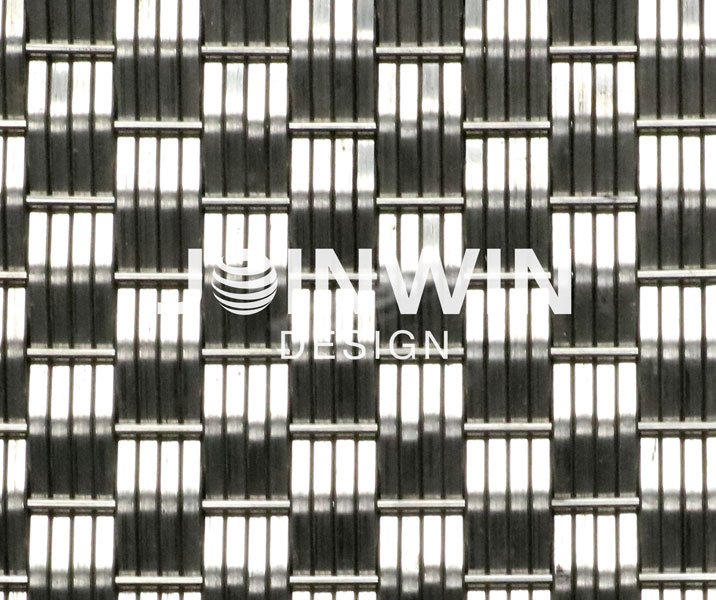
The mesh specification and support system must be designed according to applicable safety requirements.
12. It Is Suitable for Commercial Interiors
Retail stores increasingly use metal mesh as a design element.
Applications include:
Store partitions
Display backgrounds
Ceiling decoration
Feature walls
Window decoration
The reflective surface of metal mesh can interact with lighting to create an eye-catching retail environment.
13. It Can Create a Luxury Interior
Material selection has a major influence on the final appearance.
For example:
Stainless steel → Modern and technical
Aluminum → Lightweight and contemporary
Brass → Warm and luxurious
Copper → Distinctive and architectural
Combined with appropriate lighting, architectural mesh can create high-end interior effects without requiring a completely solid decorative surface.
14. It Is Lightweight Compared With Solid Metal Panels
One advantage of wire mesh is that it contains open areas.
This means that for some designs, the amount of metal required can be lower than that of a solid metal sheet of the same visual coverage.
This can reduce:
Dead load
Material consumption
Handling requirements
However, the actual weight depends heavily on mesh type, wire diameter, opening, material, and supporting structure.
15. It Is Flexible for Complex Designs
Some architectural wire meshes can be:
Flat
Curved
Draped
Folded
Suspended
This flexibility allows designers to create forms that would be difficult with rigid panels.
For example, a metal mesh curtain can be used to create a flowing interior partition.
16. It Can Be Combined With Lighting
Lighting can dramatically change the appearance of architectural wire mesh.
Designers can place lighting:
Behind the mesh
Above the mesh
Below the mesh
Inside a layered facade
The mesh can then become part of the lighting design.
This is particularly effective in:
Hotel lobbies
Retail stores
Restaurants
Exhibition spaces
Cultural buildings
17. It Provides Visual Privacy
Architectural mesh does not necessarily create complete privacy.
Instead, it can provide partial visual screening.
By selecting a denser weave, designers can reduce direct visibility while still allowing:
Light
Air
Some visual connection
This makes it useful for:
Office partitions
Hotel spaces
Restaurant seating
Changing areas
Commercial interiors
18. It Can Help Create a Layered Facade
A building facade does not have to be a single flat surface.
Architectural wire mesh can create a second layer outside the main building envelope.
This can add:
Depth
Shadow
Texture
Visual identity
The result can be especially attractive when the facade changes appearance according to sunlight and viewing angle.
19. It Is Durable
High-quality architectural mesh made from suitable metal can provide long-term performance.
Stainless steel, for example, is widely used where durability and corrosion resistance are important.
The expected service life depends on:
Material grade
Environmental exposure
Surface treatment
Installation
Maintenance
Outdoor coastal and industrial environments require more careful material selection than dry indoor environments.
20. It Is Relatively Easy to Maintain
Metal mesh generally does not require the same type of maintenance as painted fabric or other soft decorative materials.
Depending on the application, maintenance may involve:
Dust removal
Washing
Periodic inspection
Cleaning of support systems
The appropriate cleaning method depends on the metal and surface finish.
Architectural Wire Mesh Applications
Application Main Function
Building facade Decoration + screening
Interior partition Space pision
Elevator interior Decorative surface
Stairway Decoration + separation
Balustrade Protection + visual design
Hotel lobby Interior decoration
Restaurant Space pision
Retail store Display + decoration
Exhibition Visual backdrop
Ceiling Decorative element
Window screen Light + visual control
Parking structure Screening + ventilation
Architectural Wire Mesh vs Glass
Feature Architectural Wire Mesh Glass
Transparency Adjustable Usually high
Airflow Excellent Limited when closed
Texture High Low
Visual privacy Adjustable Usually low unless treated
Light control Excellent Requires additional treatment
Flexibility High Low
Metallic appearance Yes No
Decorative patterns Many More limited
Maintenance Generally straightforward Cleaning required
Architectural character Strong Clean/minimal
Architectural mesh and glass are not necessarily competing materials.
In many modern buildings, they can be used together.
Architectural Wire Mesh vs Solid Metal Panel
Feature Wire Mesh Solid Metal Panel
Airflow High Very low
Transparency Adjustable None
Weight Often lower Higher
Light transmission Yes No
Visual texture High Moderate
Flexibility High Low
Facade layering Excellent Good
Privacy Adjustable Complete
Wire mesh is particularly attractive when designers want to create a barrier without creating a completely solid surface.
How to Choose Architectural Wire Mesh?
1. Define the Application
First determine whether the mesh will be used for:
Exterior facade
Interior partition
Elevator
Ceiling
Stairway
Balustrade
Decorative wall
Different applications require different performance characteristics.
2. Select the Material
Stainless Steel
Best for durability and corrosion resistance.
Aluminum
Best when lightweight construction and color flexibility are important.
Brass
Best for warm, luxury-oriented interiors.
Copper
Best for distinctive architectural appearance.
3. Determine the Required Transparency
Ask:
How much of the background should be visible?
For a highly transparent design, select a more open structure.
For stronger visual screening, select a denser mesh.
4. Select the Weave Pattern
Different weave patterns affect:
Appearance
Openness
Strength
Light reflection
For architectural projects, requesting samples is highly recommended.
5. Select the Surface Finish
Possible finishes can include:
Natural metallic
Polished
Brushed
Anodized
Powder coated
Custom decorative finishes
The final choice should coordinate with the surrounding architecture.
6. Consider the Installation System
Architectural mesh is usually not installed like ordinary wire mesh.
The system may include:
Tracks
Rods
Cables
Frames
Tensioning systems
Hooks
Clamps
For large facade projects, the supporting system is an important part of the design.
Common Mistakes When Choosing Architectural Wire Mesh
Choosing Only by Appearance
A mesh may look attractive but may not have sufficient:
Strength
Corrosion resistance
Stability
Installation performance
Ignoring Transparency
Always consider how the mesh looks:
From the front
From behind
During the day
At night
Lighting can significantly change its appearance.
Ignoring the Supporting Structure
The mesh itself is only one part of the installation.
The supporting system must handle:
Mesh weight
Wind loads
Tension
Building movement
Installation conditions
Selecting Material Without Considering the Environment
A beautiful indoor finish may not be appropriate for a highly exposed coastal facade.
Material and surface treatment should match the actual environment.
Why Architects Like Architectural Wire Mesh
The popularity of architectural wire mesh can ultimately be summarized in several characteristics:
1. Design Freedom
Many materials, patterns, colors, and finishes are available.
2. Transparency
It can separate spaces without completely blocking views.
3. Airflow
Open construction allows ventilation.
4. Light Control
Mesh density can influence sunlight and shadows.
5. Durability
Metal provides long-term performance when properly selected.
6. Flexibility
Some products can be curved, draped, or suspended.
7. Modern Appearance
Metallic texture fits contemporary architecture.
8. Multi-Functional Performance
The same material can provide both decoration and practical functionality.
Frequently Asked Questions
What is architectural wire mesh used for?
It is used for building facades, interior partitions, elevator interiors, stairways, balustrades, ceilings, hotel interiors, restaurants, retail stores, exhibition spaces, and decorative screens.
Is architectural wire mesh strong?
It can be strong, but strength depends on the material, wire diameter, weave pattern, mesh structure, and supporting system.
Can architectural wire mesh be used outdoors?
Yes. Stainless steel and appropriately treated aluminum mesh are commonly considered for exterior architectural applications. The material and finish should be selected according to local environmental conditions.
Can architectural wire mesh be customized?
Yes. Architectural mesh can often be customized in material, wire diameter, opening, weave pattern, dimensions, color, surface finish, and installation configuration.
Does architectural mesh provide privacy?
It can provide partial visual privacy. The level of privacy depends primarily on mesh density, opening size, viewing angle, lighting, and background conditions.
Is architectural wire mesh expensive?
Pricing varies significantly according to material, wire diameter, weave pattern, finish, dimensions, and quantity. Stainless steel and specialized decorative finishes generally cost more than basic aluminum configurations.
Why Choose joinwin design Architectural Wire Mesh?
joinwin design supplies architectural wire mesh for architects, interior designers, contractors, façade companies, developers, hotel projects, retail spaces, and international distributors.
Available materials include:
Stainless steel
Aluminum
Brass
Copper
Other metal options according to project requirements
Architectural mesh can be customized according to:
Wire diameter
Opening
Weave pattern
Mesh width
Mesh length
Color
Surface finish
Panel or curtain configuration
Installation system
Applications include:
Building Facades + Interior Partitions + Elevators + Ceilings + Stairways + Hotels + Restaurants + Retail + Exhibitions
For architectural projects, customers can provide the application, dimensions, preferred material, transparency requirement, color/finish, installation method, quantity, and destination so the appropriate mesh can be recommended.
Conclusion
Architectural wire mesh has become popular in modern architecture because it offers something that many traditional materials cannot easily provide:
A combination of decoration, transparency, airflow, light control, flexibility, and durability.
It can transform a building facade, create a sophisticated interior partition, add depth to an elevator, or become a decorative feature in a hotel or retail space.
The key is that architectural wire mesh is not simply a piece of metal mesh. It is a design material and functional architectural system.
When selecting the right product, consider:
Material + Weave Pattern + Wire Diameter + Openness + Color + Surface Finish + Installation System
For architects and project buyers, the best architectural mesh is not necessarily the most expensive or the most visually complex. It is the mesh that achieves the desired visual effect and functional performance while fitting the project's structural, environmental, and budget requirements.
pre:What Is Aluminum Chain Curtain and Where Is It Used?
next:How to Choose the Right Aluminum Chain Curtain for Interior Design?
© 2026 Joinwin Architectural Wire. All Rights Reserved. | Sitemap

Recommended Read
Architectural Wire Mesh in Modern Buildings: Design Benefits, Functions and Applications
Architectural Wire Mesh vs Perforated Metal: Design, Performance and Application Guide
What Is Architectural Wire Mesh and How Is It Used in Modern Buildings?