Architects and interior designers have many options when selecting metal materials for facades, ceilings, partitions, screens, balustrades, and decorative features. Two materials that are often considered for similar projects are architectural wire mesh and perforated metal.
At first glance, they may appear to serve the same purpose. Both can create decorative metal surfaces, provide partial screening, control visibility, and add a distinctive architectural character.
However, their structures are fundamentally different.
Architectural wire mesh is produced by weaving or interlocking metal wires, creating an open and flexible metal fabric. Perforated metal is produced by punching or stamping holes into a solid metal sheet, creating a rigid panel with a repeating pattern.
This difference affects appearance, transparency, airflow, flexibility, installation, acoustics, and project applications.
So which one should you choose?
The answer depends less on which material is “better” and more on what the architectural element needs to achieve.
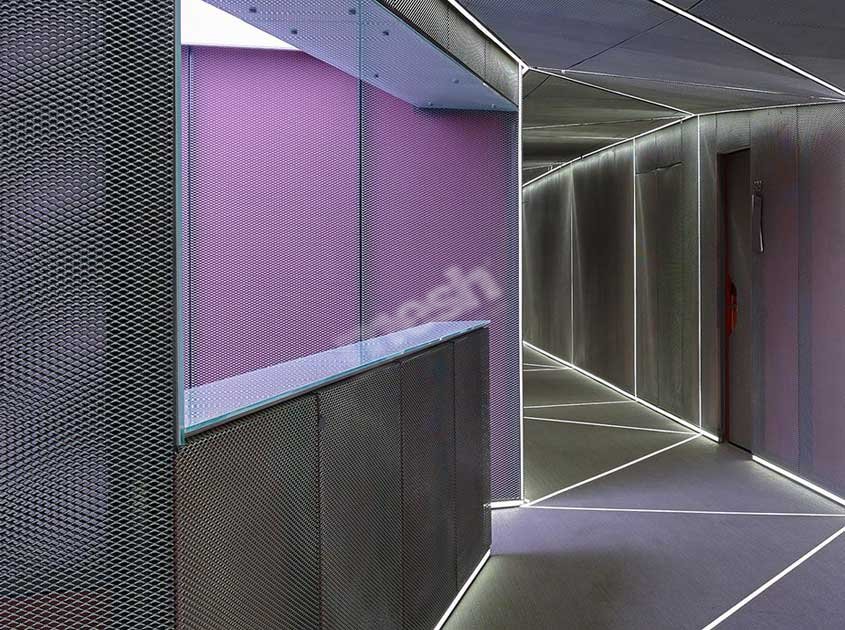
What Is Architectural Wire Mesh?
Architectural wire mesh is a metal textile made by weaving metal wires into different patterns.
Depending on the design, it can be produced using:
Stainless steel wire
Aluminum wire
Brass wire
Copper wire
Mild steel wire
Other metal alloys
Common architectural wire mesh patterns include:
Woven wire mesh
Decorative woven mesh
Crimped wire mesh
Cable mesh
Metal coil drapery
Chain link-style decorative mesh
Flexible metal fabric
Unlike conventional industrial wire mesh, architectural mesh is designed not only for functional performance but also for visual appearance and architectural integration.
It can be used as a decorative facade, room pider, ceiling element, curtain, balustrade infill, or feature wall.
What Is Perforated Metal?
Perforated metal is manufactured from a sheet or plate of metal.
A punching or perforating machine creates a repeated pattern of openings in the sheet.
Common patterns include:
Round holes
Square holes
Rectangular holes
Slotted holes
Hexagonal holes
Decorative patterns
Custom designs
Common materials include:
Stainless steel
Aluminum
Mild steel
Galvanized steel
Brass
Other sheet metals
Because the original material is a continuous sheet, perforated metal generally forms a rigid panel.
It is widely used for architectural facades, sun screens, ventilation panels, equipment enclosures, ceilings, acoustic applications, and decorative walls.
Architectural Wire Mesh vs Perforated Metal: Main Differences
The most important differences can be summarized as follows:
Feature Architectural Wire Mesh Perforated Metal
Basic structure Woven/interlocked wires Perforated metal sheet
Form Flexible to semi-rigid Rigid panel
Transparency Highly variable Highly variable
Light transmission Excellent options available Depends on open area
Airflow Generally high Depends on perforation pattern
3D flexibility Excellent with suitable mesh types Limited
Draping capability Yes, for flexible mesh No
Visual effect Textile-like, layered, metallic Geometric, solid-panel appearance
Curved surfaces Many options Possible with fabrication
Large continuous sheets Roll or panel formats Sheet/panel format
Acoustic potential Depends on system Often suitable for acoustic panels
Typical applications Facades, curtains, partitions, ceilings Facades, screens, ceilings, panels
Installation Mesh-specific systems Panel framing/fixing systems
These are general characteristics. Actual performance depends on the specific mesh construction, metal, thickness, opening ratio, and installation system.
1. Which Material Offers More Design Freedom?
Both materials offer extensive design possibilities, but they create different visual effects.
Architectural wire mesh provides a textile-like appearance.
The woven wires can create:
Soft visual layers
Metallic reflections
Three-dimensional textures
Semi-transparent partitions
Draped surfaces
Dynamic facade effects
Perforated metal provides a more geometric and architectural panel appearance.
Designers can control:
Hole shape
Hole size
Hole spacing
Open area
Sheet thickness
Pattern arrangement
Therefore, the choice often depends on the design language of the building.
For a warm, layered, flowing appearance, architectural wire mesh may be appropriate.
For a clean, geometric, panel-based appearance, perforated metal may be more suitable.
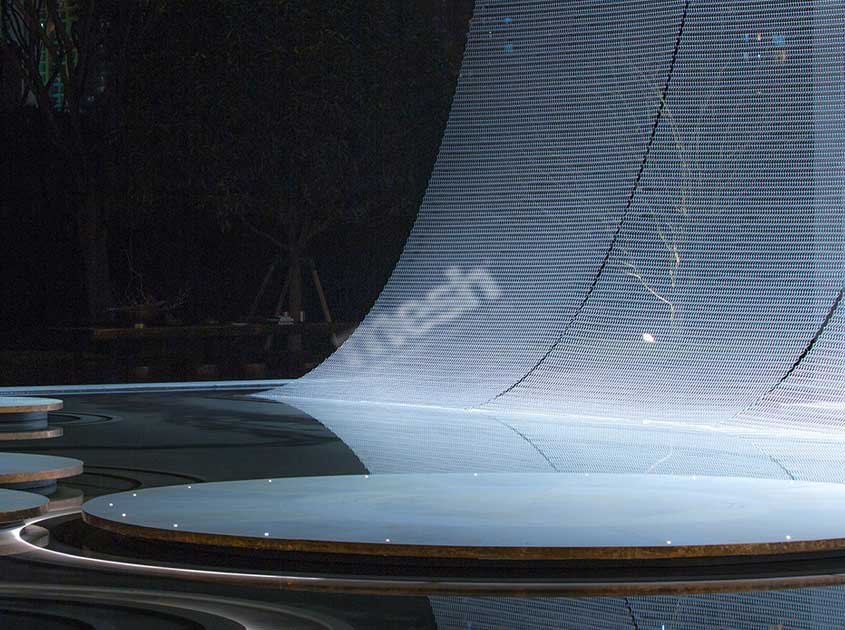
2. Which One Provides Better Transparency?
Transparency is one of the most interesting differences.
Architectural wire mesh can create a semi-transparent surface where people can see through the mesh while the metal structure remains visually prominent.
Depending on the weave, wire diameter, and opening, designers can create different levels of:
Visibility
Privacy
Light transmission
Visual separation
Perforated metal can also provide excellent transparency, but the visual effect is different.
The repeated holes create a stronger geometric pattern.
The key specification for both materials is the open area.
A higher open area generally allows more light and air to pass through, while a lower open area creates a more visually solid screen.
Therefore, designers should compare actual open-area percentages rather than judging transparency from the material name alone.
3. Which One Allows More Airflow?
Both materials can allow significant airflow.
Architectural wire mesh naturally contains open spaces between the wires.
Perforated metal relies on the percentage and geometry of the perforated area.
For applications such as:
Ventilation screens
Parking garage facades
Mechanical equipment screens
Exterior sun screens
Building service areas
the designer should evaluate the required airflow and open area.
For technical applications, airflow should be calculated based on the complete system rather than simply assuming that one material always provides better ventilation.
4. Which Is Better for Curved or Draped Applications?
This is an area where architectural wire mesh has a significant advantage.
Some architectural wire mesh products are flexible enough to:
Hang like a curtain
Follow curved surfaces
Create waves
Form suspended partitions
Wrap around architectural features
Metal coil drapery is a particularly flexible example.
Perforated metal is normally supplied as rigid sheets or panels.
Although perforated sheets can be curved, rolled, or fabricated into three-dimensional components, they generally do not behave like a flexible metal textile.
Therefore, for curtains, drapes, flexible partitions, and flowing architectural surfaces, wire mesh is often the more natural material.
5. Which Is Better for Building Facades?
Both can be used for architectural facades.
The selection depends on the desired visual and technical characteristics.
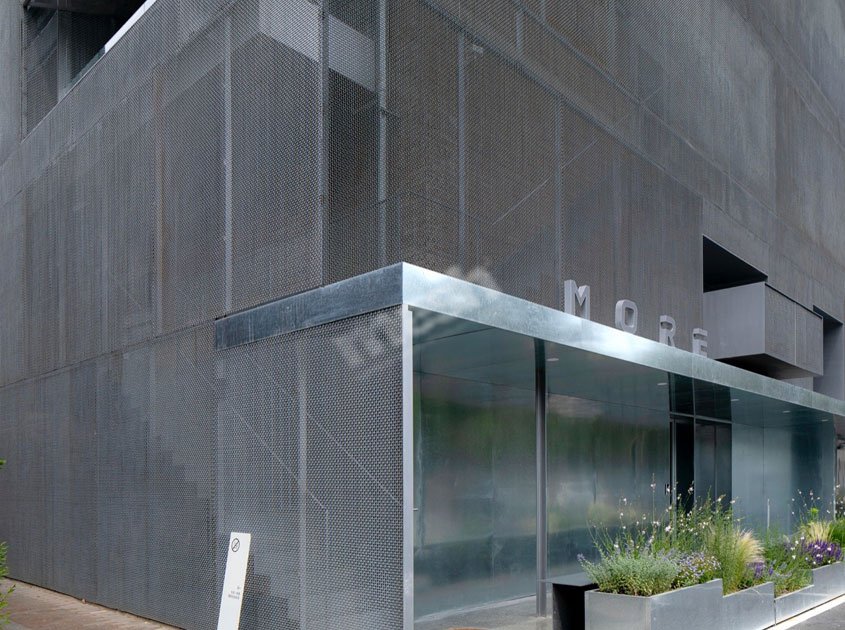
Architectural Wire Mesh Facades
Wire mesh can create:
Layered facade effects
Semi-transparent exterior skins
Metallic textures
Dynamic reflections
Decorative screening
Sun-shading elements
The mesh can sometimes be installed in front of glass or other building materials to create a second architectural layer.
Perforated Metal Facades
Perforated panels can create:
Strong geometric patterns
Uniform panel surfaces
Solar-screening systems
Ventilation screens
Equipment concealment
Large-format decorative facades
Perforated metal is particularly suitable when the facade requires a rigid panel system.
6. Architectural Wire Mesh for Interior Design
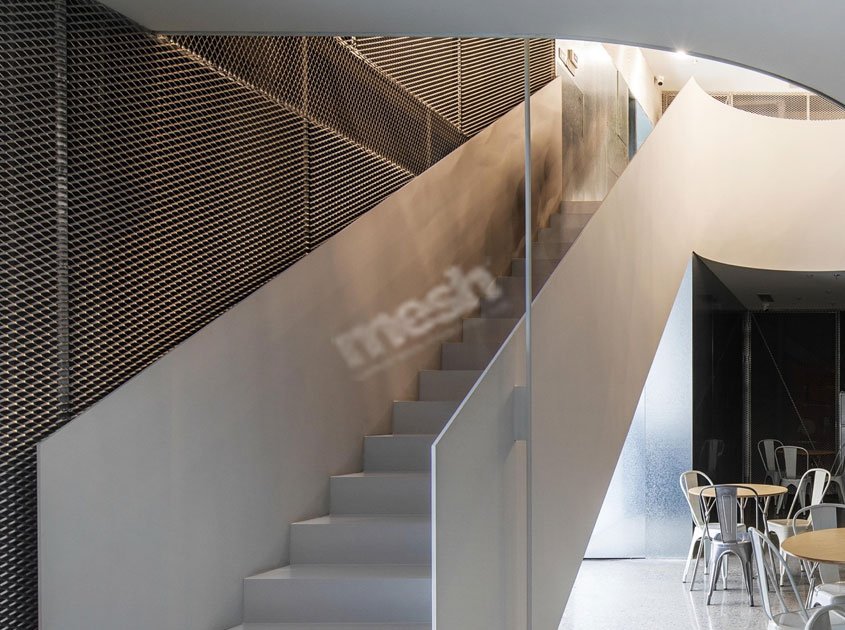
Architectural wire mesh is widely used indoors because of its decorative and flexible characteristics.
Typical applications include:
Room Dividers
Mesh can separate spaces without creating a completely solid wall.
Decorative Curtains
Metal coil drapery can be used as a decorative curtain or spatial pider.
Ceiling Features
Suspended mesh can create a layered ceiling effect.
Stair and Balcony Infill
Rigid architectural mesh can be incorporated into railing systems.
Retail Interiors
Metallic mesh can be used for displays, feature walls, partitions, and decorative backgrounds.
Hospitality Projects
Hotels, restaurants, and entertainment venues can use metal mesh to create a distinctive visual identity.
Perforated metal can also be used in these applications, particularly where rigid panels and geometric patterns are preferred.
7. Which Material Is Better for Acoustic Applications?
This question requires some caution.
Neither architectural wire mesh nor perforated metal automatically provides good acoustic performance simply because it has openings.
Acoustic performance depends on the complete assembly, including:
Material thickness
Open area
Cavity depth
Absorptive material behind the surface
Panel construction
Installation method
Perforated metal is frequently used as the visible facing material for acoustic wall and ceiling systems because it can be combined with sound-absorbing materials behind the perforated surface.
Architectural wire mesh can also form part of an acoustic or spatial system, but its performance depends heavily on the overall design.
For an acoustic project, the complete tested system should be evaluated rather than choosing material based solely on appearance.
8. Which One Is Easier to Install?
Installation depends strongly on the specific product.
Architectural wire mesh may be supplied as:
Rolls
Panels
Curtains
Custom-fabricated sections
Installation can involve:
Tracks
Rods
Frames
Tension systems
Hooks
Clips
Specialized architectural fittings
Perforated metal is generally installed as rigid panels using:
Frames
Clips
Screws
Bolts
Hidden fixing systems
Supporting structures
For large projects, installation should be considered during the design stage.
A beautiful material can become expensive if its fixing system is complicated or requires extensive site fabrication.
9. Which Material Is More Durable?
Both can provide long-term performance when the correct material and finish are selected.
Durability depends on:
Base metal
Material thickness or wire diameter
Surface treatment
Environmental exposure
Installation
Maintenance
Stainless steel architectural mesh is commonly selected for demanding environments where corrosion resistance is important.
Aluminum can provide a lightweight solution for certain architectural applications.
Perforated stainless steel and aluminum panels can also provide strong corrosion resistance depending on the alloy and finish.
For exterior projects, the material should be selected according to the actual environmental conditions rather than simply choosing the most attractive finish.
10. Stainless Steel Wire Mesh vs Aluminum Perforated Metal
Material weight can become important in architectural projects.
Stainless steel architectural mesh can provide a combination of:
Corrosion resistance
Strength
Metallic appearance
Fine mesh construction
Aluminum perforated metal is often attractive when designers want:
Lower material weight
Large rigid panels
Custom perforation patterns
Various surface finishes
However, material selection should consider structural requirements, panel size, wind loads, fixing systems, and fabrication.
The lightest material is not automatically the best material for every facade.
11. Which One Has More Customization Options?
Both can be customized extensively.
Architectural Wire Mesh Customization
Manufacturers may customize:
Wire diameter
Mesh opening
Weave pattern
Mesh width
Mesh length
Material
Surface finish
Color
Panel size
Cable or rod reinforcement
Some architectural mesh manufacturers also offer hundreds of decorative patterns.
Perforated Metal Customization
Manufacturers may customize:
Hole diameter
Hole shape
Hole spacing
Pitch
Open area
Sheet thickness
Sheet size
Pattern arrangement
Material
Surface finish
Color
Therefore, the right choice depends on which type of customization the project requires.
12. Which One Is More Cost-Effective?
There is no universal price winner.
The final cost depends on:
Material
Thickness or wire diameter
Open area
Mesh design
Surface treatment
Quantity
Panel or roll dimensions
Custom fabrication
Fixing system
Installation
Standard perforated metal may be economical for simple panel applications.
Standard architectural mesh may be more practical for large decorative surfaces or flexible applications.
Highly customized architectural mesh can also become a premium product, particularly when special patterns, materials, finishes, or fabrication are required.
For a project quotation, buyers should compare the complete installed system, not just the price per square meter of the raw material.
13. Architectural Wire Mesh vs Perforated Metal for Sun Screening
Both materials can be used as solar screens.
The objective is generally to reduce direct solar exposure while maintaining some combination of:
Natural daylight
Outdoor visibility
Airflow
Architectural appearance
Architectural mesh can create a semi-transparent metallic veil over a facade.
Perforated panels can provide a more solid and geometric solar screen.
The correct design depends on factors such as:
Open area
Orientation
Solar exposure
Building location
Panel position
Required daylight
Desired visibility
For energy-related projects, the complete facade system should be analyzed rather than relying on the material type alone.
14. Which Material Should Architects Choose?
A simple application-based approach can help.
Choose Architectural Wire Mesh When You Need:
A textile-like metallic appearance
Flexible or draped surfaces
Curved applications
Decorative curtains
Semi-transparent partitions
Layered facade effects
Unique woven textures
Lightweight visual screening
Custom woven patterns
Choose Perforated Metal When You Need:
Rigid panels
Geometric perforation patterns
Large solid-looking screens
Standardized panel construction
Equipment enclosures
Acoustic panel facings
Ventilation screens
Structured facade systems
Custom hole patterns
There is also no requirement to choose only one.
Architectural projects can combine both materials to create different visual and functional zones.
15. Can Architectural Wire Mesh and Perforated Metal Be Used Together?
Yes.
Combining different metal surfaces can create interesting architectural effects.
For example:
Perforated metal + architectural wire mesh
can be used to create:
Layered facades
Double-screen systems
Decorative partitions
Feature walls
Retail displays
Ceiling installations
Mixed-material interiors
A rigid perforated panel can provide structure, while woven mesh can introduce transparency and texture.
This approach allows architects to control the visual density of different areas within the same project.
Architectural Wire Mesh vs Perforated Metal: Quick Comparison
Project Requirement Architectural Wire Mesh Perforated Metal
Flexible curtain —
Draped installation —
Semi-transparent partition
Geometric screen
Rigid facade panel
Custom hole pattern —
Woven texture —
Large decorative facade
Acoustic panel facing Possible Common
Curved application Excellent for suitable mesh Possible
Lightweight visual screen
Equipment enclosure Possible
Layered facade
Questions to Ask Before Choosing
Before specifying either material, architects and contractors should answer several questions:
1. Is the material primarily decorative or functional?
A decorative feature wall may have very different requirements from an exterior facade screen.
2. Does the surface need to be flexible?
If the material must hang, drape, or follow curves, architectural wire mesh may be particularly suitable.
3. How much visibility is required?
Compare the actual opening or open-area percentage.
4. Is airflow important?
Consider the complete opening ratio and installation structure.
5. Is the material indoors or outdoors?
Material grade and surface treatment should reflect the environment.
6. Does the project require rigid panels?
If so, perforated metal may be more convenient.
7. What fixing system will be used?
The fixing system can significantly affect both appearance and total project cost.
8. What quantity is required?
Large commercial projects should confirm standard production sizes, custom tooling, packaging, and lead times before final specification.
How to Source Architectural Wire Mesh for a Project
For architects, contractors, distributors, and project developers, sourcing should begin with a clear technical specification.
For architectural wire mesh, provide:
Mesh type
Weave pattern
Material
Wire diameter
Mesh opening
Width
Length
Finish
Color
Panel or roll format
Quantity
Installation requirements
For perforated metal, provide:
Material
Sheet thickness
Hole shape
Hole size
Hole spacing
Open area
Sheet dimensions
Finish
Quantity
If the project involves a custom design, it is useful to send drawings, CAD files, renderings, or reference images to the manufacturer.
A manufacturer experienced in architectural mesh can then evaluate production feasibility and recommend suitable specifications.
Final Thoughts
Architectural wire mesh and perforated metal can both transform a building surface, but they create different combinations of appearance and performance.
Architectural wire mesh is particularly attractive when the project requires flexibility, woven texture, transparency, draping, or a layered metallic appearance.
Perforated metal is often more suitable when the design calls for rigid panels, geometric perforation patterns, structured screens, or panel-based architectural systems.
The best material should therefore be selected according to the project's actual requirements rather than simply comparing the two materials on price.
Before making a final decision, consider:
Appearance + transparency + airflow + flexibility + material + environment + installation + total project cost
For architectural projects, requesting samples is also highly recommended. The way light, reflections, shadows, and visibility interact with metal mesh can be very different from what appears in a digital rendering.
For architects, designers, contractors, and distributors sourcing architectural metal products from China, a detailed project specification allows the manufacturer to recommend the appropriate mesh construction, material, finish, dimensions, and installation method for the application.
pre:How to Choose the Right Aluminum Chain Curtain for Interior Design?
next:Aluminum Chain Curtain vs Traditional Fabric Curtain: Differences, Applications and Buying Guide
© 2026 Joinwin Architectural Wire. All Rights Reserved. | Sitemap

Recommended Read
How to Select the Right Metal for Architectural Mesh: Stainless Steel, Aluminum and Carbon Steel Compared
Architectural Wire Mesh in Modern Buildings: Design Benefits, Functions and Applications
Why Is Architectural Wire Mesh Popular in Modern Architecture?