Curtains are normally associated with fabric, but metal chain curtains offer a completely different approach to interior and architectural design.
An aluminum chain curtain is made from interconnected aluminum links that form a flexible curtain. Instead of creating a solid visual barrier like many traditional fabric curtains, the chain structure allows light and air to pass through while creating a distinctive metallic appearance.
This makes aluminum chain curtains particularly interesting for restaurants, hotels, retail stores, commercial interiors, entrances and decorative spaces.
But how does an aluminum chain curtain compare with a traditional fabric curtain?
The answer depends on what the curtain needs to achieve. Fabric is often selected for softness, insulation and traditional privacy, while aluminum chain curtains are often chosen for visual texture, airflow, flexibility and decorative impact.
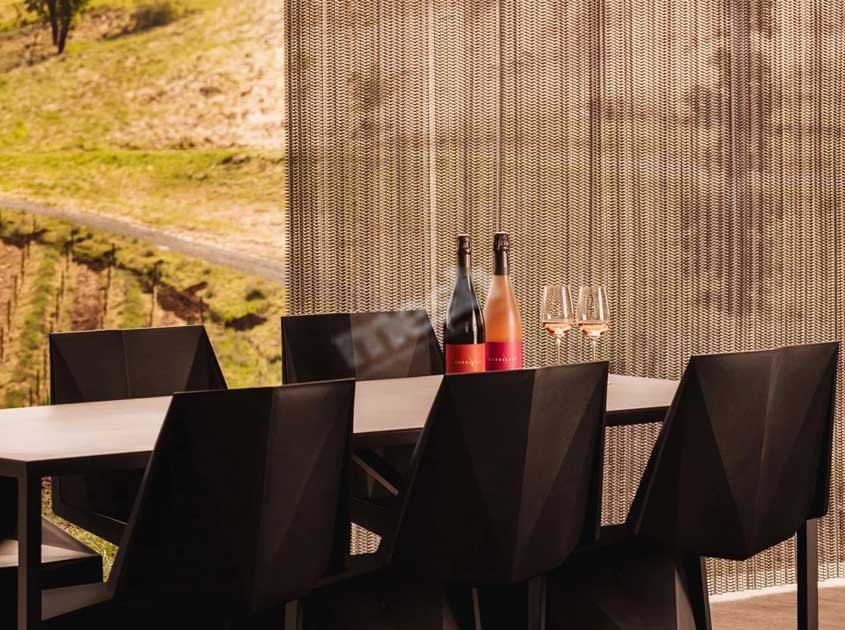
This guide compares the two materials and explains where each type can be more appropriate.
1. What Is an Aluminum Chain Curtain?
An aluminum chain curtain is a flexible decorative curtain made from interconnected aluminum chain links.
The links are typically assembled into vertical strands and suspended from a track or top rail.
Unlike a solid sheet or traditional textile curtain, the curtain consists primarily of inpidual metal links.
This gives it several distinctive characteristics:
Lightweight metal construction
Flexible hanging structure
Open visual appearance
Air permeability
Light transmission
Metallic texture
Easy movement
Various colors and finishes
Aluminum chain curtains are sometimes also called:
Aluminum chain curtain
Chain curtain
Metal chain curtain
Aluminum link curtain
Chain door curtain
Decorative chain curtain
The exact terminology can vary between markets.
2. How Is a Traditional Fabric Curtain Different?
Traditional curtains are generally made from woven or knitted textile materials such as:
Polyester
Cotton
Linen
Blended fabrics
Velvet
Other textile materials
Fabric curtains create a continuous surface.
Depending on the material and construction, they can provide:
Privacy
Light reduction
Decoration
Sound absorption
Draft reduction
Visual separation
Unlike aluminum chain curtains, most conventional fabric curtains do not allow air and visibility to pass freely through the curtain when closed.
This fundamental structural difference creates most of the differences between the two products.
3. Aluminum Chain Curtain vs Fabric Curtain: Quick Comparison
Feature Aluminum Chain Curtain Traditional Fabric Curtain
Material Aluminum metal links Textile fabric
Structure Open chain structure Continuous fabric surface
Appearance Metallic and contemporary Soft and traditional
Airflow High Low when closed
Light transmission Usually high Depends on fabric
Visibility Partial Low to high depending on fabric
Privacy Partial Generally higher
Flexibility Very flexible Flexible
Movement Moves with airflow Can move with airflow
Cleaning Generally simple Depends on textile
Moisture resistance Depends on aluminum finish Depends on fabric
Decorative style Modern / industrial Classic / soft
Customization Color, density, dimensions Fabric, color, pattern, lining
The comparison shows that the two products are designed around different priorities.
4. Appearance and Interior Style
One of the biggest differences is visual character.
Fabric curtains create a soft, warm and familiar appearance.
They are commonly used in:
Bedrooms
Living rooms
Hotels
Offices
Restaurants
Traditional interiors
Aluminum chain curtains create a more open and metallic appearance.
They can be suitable for:
Modern restaurants
Bars
Retail stores
Hotels
Shopping centers
Exhibition spaces
Commercial interiors
Contemporary residential interiors
The inpidual chains also create movement and reflections when people walk past or when air moves through the space.
5. Airflow: A Major Difference
Airflow is one of the strongest reasons to consider a chain curtain.
Because aluminum chain curtains consist of separated metal links, air can pass through the openings between the chains.
This can be useful in areas where the designer wants to separate spaces without completely closing them.
Potential applications include:
Restaurant entrances
Kitchen openings
Retail areas
Covered outdoor spaces
Commercial entrances
Interior partitions
A traditional fabric curtain can restrict airflow significantly when fully closed, depending on its material and construction.
Therefore, if maintaining visual separation while preserving airflow is important, an open metal chain structure can offer a different design solution.
6. Privacy and Visibility
Fabric curtains generally provide greater privacy because they create a continuous surface.
Blackout or heavy fabrics can block most direct visibility.
Aluminum chain curtains work differently.
People may still see through the curtain depending on:
Chain spacing
Chain density
Viewing angle
Lighting
Curtain movement
Link design
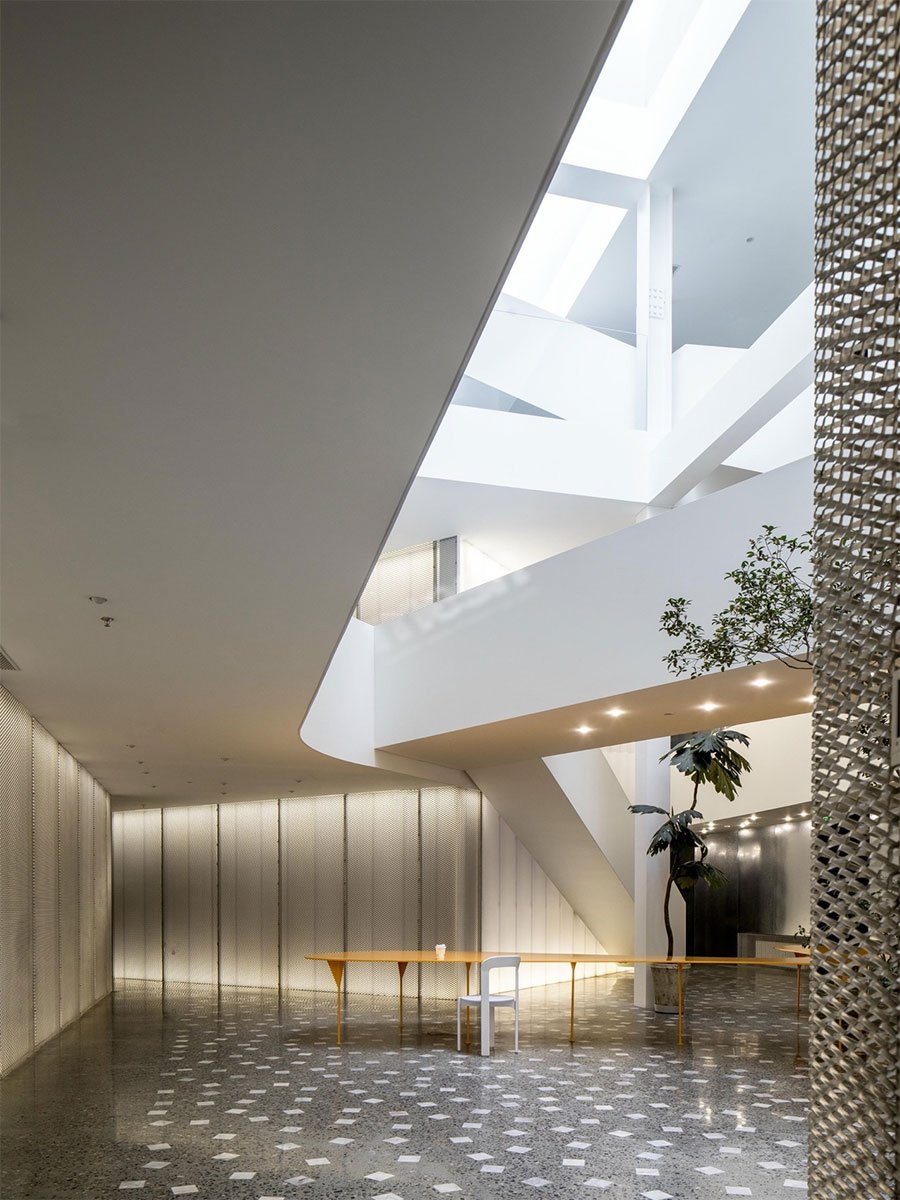
This partial visibility can be an advantage in commercial interiors where complete separation is not required.
For example, a restaurant may want to visually pide two dining areas while allowing customers to see the overall space.
7. Light Transmission
Traditional fabric can range from highly transparent sheer material to almost completely opaque blackout material.
Aluminum chain curtains normally provide a more open visual structure.
Light can pass through the spaces between the chains while the metal links create reflections and shadows.
This can create interesting effects under:
Natural daylight
Spotlights
Pendant lighting
Backlighting
Colored lighting
The final appearance depends heavily on chain density and finish.
A dense chain curtain can appear visually heavier, while a more open arrangement creates a lighter effect.
8. Durability and Everyday Use
Metal and textile curtains experience wear in different ways.
Fabric can be affected by:
Tearing
Staining
Fraying
Fading
Moisture
Repeated washing
Aluminum chain curtains do not have the same textile structure.
The metal links can move repeatedly without requiring the same type of fabric maintenance.
However, aluminum chain curtains are not indestructible.
The following factors can affect their performance:
Link design
Aluminum alloy
Surface finish
Installation quality
Frequency of use
Mechanical impact
Environmental exposure
For high-traffic commercial spaces, the chain and suspension system should be selected according to the intended use.
9. Cleaning and Maintenance
Cleaning requirements are another important difference.
Fabric curtains can accumulate:
Dust
Oil
Food particles
Moisture
Odors
Depending on the material, they may require washing, dry cleaning or specialized cleaning.
Aluminum chain curtains can generally be cleaned differently because the surface is metal rather than textile.
For restaurants and commercial spaces, this can be useful where the curtain is exposed to frequent traffic or food-related environments.
However, the exact cleaning method should follow the finish manufacturer's recommendations, particularly for coated or colored aluminum.
10. Moisture and Humid Environments
Aluminum is naturally different from conventional textile materials when exposed to moisture.
This can make aluminum chain curtains useful for certain locations where fabric may be less convenient.
Potential applications include:
Covered patios
Restaurant entrances
Poolside areas
Commercial openings
Humid interior environments
However, environmental suitability still depends on the aluminum alloy, surface finish and surrounding conditions.
For coastal or highly corrosive environments, the complete product specification should be reviewed rather than assuming that every aluminum finish will perform identically.
11. Aluminum Chain Curtain for Restaurant Entrances
Restaurants are one of the most practical applications for decorative chain curtains.
A chain curtain can separate:
Dining area and kitchen
Indoor and semi-outdoor spaces
Bar and dining area
Entrance and seating areas
The open structure allows people to pass through easily without opening and closing a conventional curtain.
At the same time, the metallic chains create a decorative feature.
12. Aluminum Chain Curtain for Retail Stores
Retail designers can use chain curtains as flexible visual partitions.
Applications include:
Store entrances
Display areas
Fitting rooms
Back-of-house separation
Decorative backgrounds
Window displays
Because the chain curtain remains visually open, products and display areas can remain partially visible.
This can create a more connected retail environment than a solid partition.
13. Aluminum Chain Curtain for Hotels
Hotels can use metal chain curtains in both decorative and functional applications.
Examples include:
Lobby partitions
Restaurant entrances
Bar areas
Reception backgrounds
Event spaces
Decorative room piders
Feature walls
Gold, bronze, black and other finishes can be selected to coordinate with the hotel's interior design.
The curtain can also be combined with lighting to create a more dynamic visual feature.
14. Chain Curtain as a Room Divider
A traditional fabric curtain can completely close a room or area.
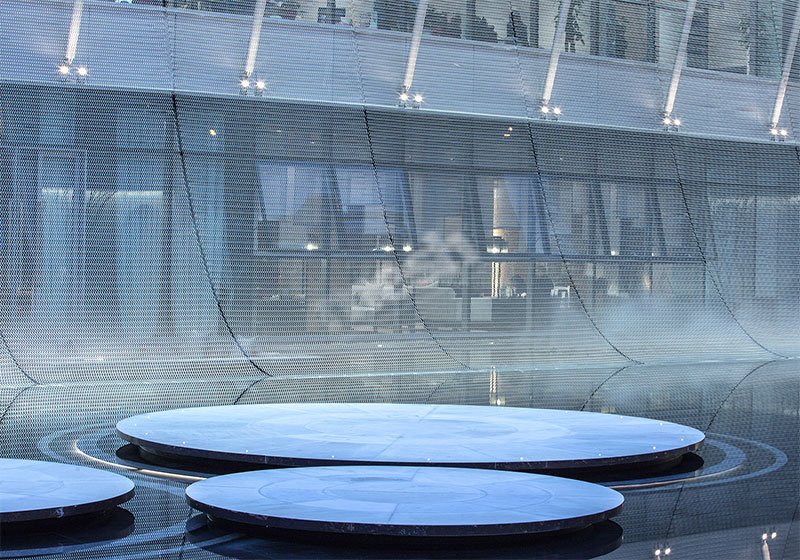
An aluminum chain curtain provides a different type of separation.
It can pide a space while maintaining:
Light transmission
Airflow
Partial visibility
Easy pedestrian access
This makes it suitable for spaces where a permanent wall would feel too heavy.
Possible applications include:
Offices
Restaurants
Hotels
Exhibition halls
Retail spaces
Residential interiors
15. Aluminum Chain Curtain vs Fabric Curtain for Doorways
Doorways are an especially useful comparison.
A traditional curtain may need to be manually opened and closed.
A chain curtain can often be walked through directly because inpidual chain strands move around the person.
This can be convenient for frequently used openings.
Potential applications include:
Restaurant entrances
Kitchen entrances
Service areas
Retail openings
Commercial doorways
The top track and suspension system should be designed to support the curtain weight and expected traffic.
16. Design and Color Options
Aluminum chain curtains can be customized in various colors and finishes.
Potential options include:
Natural aluminum
Silver
Gold
Bronze
Black
Red
Blue
Custom colors
The visual result depends on the coating or finishing process.
This makes aluminum chain curtains suitable for projects where the curtain needs to match a specific interior color palette.
For architectural or hospitality projects, requesting physical samples is recommended because metallic finishes can appear different under different lighting conditions.
17. Chain Density and Visual Effect
Not every aluminum chain curtain has the same appearance.
The visual density depends on factors such as:
Chain width
Chain thickness
Chain spacing
Strand spacing
Curtain dimensions
Installation configuration
A dense curtain provides a stronger visual presence.
A more open curtain creates greater transparency and airflow.
Therefore, buyers should not specify an aluminum chain curtain simply by its overall width and height.
The chain dimensions and spacing also need to be defined.
18. Installation Options
Aluminum chain curtains can be installed using different suspension systems.
Common components include:
Top rail
Track
Hooks
Carriers
Mounting brackets
End stops
Supporting hardware
The system can be designed as:
Fixed curtain
Sliding curtain
Single-sided opening
Center opening
Multiple sections
For commercial projects, the installation method should be confirmed before production.
The weight of the finished curtain needs to be considered when selecting the track and supporting structure.
19. Which Is Better: Aluminum Chain Curtain or Fabric Curtain?
The answer depends on the intended application.
Choose Aluminum Chain Curtain When You Need:
A metallic decorative appearance
Strong airflow
Partial visibility
A flexible room pider
Easy pedestrian passage
A contemporary design
A lightweight visual partition
Custom metallic colors
Choose Fabric Curtain When You Need:
Higher privacy
Strong light blocking
A soft decorative appearance
Traditional interior styling
More substantial room closure
Certain insulation or acoustic properties
In some projects, both can even be used together.
For example, an interior may use a fabric curtain for privacy and an aluminum chain curtain as a decorative outer layer.
20. Aluminum Chain Curtain vs Fabric Curtain: Cost
Cost should be evaluated based on the complete system rather than only the material price.
For aluminum chain curtains, total cost may include:
Chain material
Color or surface treatment
Top rail
Track
Mounting hardware
Cutting and assembly
Packaging
Shipping
For fabric curtains, costs can include:
Fabric
Lining
Sewing
Curtain rail
Hardware
Installation
Cleaning requirements
Therefore, there is no universal rule that one type is always cheaper.
The most appropriate comparison should use the same curtain dimensions, installation requirements and project quantity.
21. How to Choose an Aluminum Chain Curtain
If you decide that a metal chain curtain is suitable, specify the following:
Material: Aluminum
Chain Type: Aluminum Link Chain
Chain Width: ___ mm
Chain Thickness: ___ mm
Strand Spacing: ___ mm
Curtain Size: ___ W × ___ H
Color: ___
Finish: ___
Installation: Fixed / Sliding
Top Rail: Required / Not Required
Quantity: ___ sets
For large projects, provide drawings showing the opening dimensions and installation arrangement.
This allows the manufacturer to calculate the required chain quantity and supporting hardware more accurately.
22. Buying Aluminum Chain Curtains for Commercial Projects
For distributors, contractors and interior designers, several details should be confirmed before placing an order.
Ask the manufacturer:
What aluminum material is used?
What are the chain dimensions?
What is the strand spacing?
What colors are available?
Is the finish anodized, coated or another treatment?
What top rail and track options are available?
Can the curtain be made to custom dimensions?
How is the curtain packaged?
Can samples be provided?
What is the loading quantity for export?
For repeat commercial projects, it is also useful to keep an approved sample for color and chain-density reference.
23. Common Buying Mistakes
Comparing Only by Square Meter Price
A lower material price may not include the same track, hardware or finishing specification.
Ignoring Chain Density
Two curtains with the same dimensions can look completely different if their chain spacing is different.
Choosing Color From a Photograph
Metallic colors can change significantly under different lighting conditions.
Forgetting the Track
The curtain itself is only part of the installation system.
Ignoring Curtain Weight
The supporting structure must be appropriate for the finished curtain.
Expecting Complete Privacy
An open chain curtain is fundamentally different from an opaque fabric curtain.
24. Frequently Asked Questions
Is an aluminum chain curtain better than a fabric curtain?
Neither is universally better. Aluminum chain curtains are suited to applications requiring metallic decoration, airflow, partial visibility and flexible separation, while fabric curtains are often more suitable for privacy, light blocking and traditional interior styling.
Can aluminum chain curtains be used as room piders?
Yes. They can separate areas while maintaining airflow, light transmission and partial visibility.
Can aluminum chain curtains be used outdoors?
They can be used in some outdoor or semi-outdoor applications, depending on the aluminum material, finish and environmental conditions.
Are aluminum chain curtains easy to clean?
They can generally be cleaned without the same washing process required by many fabric curtains. The appropriate cleaning method depends on the surface finish.
Can aluminum chain curtains provide privacy?
They can provide partial visual screening, but they generally do not provide the same level of privacy as an opaque fabric curtain.
Can aluminum chain curtains be customized?
Yes. Dimensions, chain specifications, density, colors, finishes and suspension systems can often be customized for a project.
Can aluminum chain curtains be used in restaurants?
Yes. They can be used for entrances, room separation, kitchen openings, bar areas and decorative features.
Conclusion
Aluminum chain curtains and traditional fabric curtains solve different design problems.
Fabric curtains create a continuous textile surface and are often selected when privacy, light control and a soft interior atmosphere are important.
Aluminum chain curtains use an open metal structure to create a different combination of decoration, airflow, transparency, movement and spatial separation.
For restaurants, hotels, retail stores and contemporary commercial interiors, aluminum chain curtains can turn an ordinary doorway or partition into a visible design feature.
The right choice should therefore be based on the actual requirements:
Privacy + light blocking + soft appearance → Fabric curtain
Airflow + partial visibility + metallic design + flexible separation → Aluminum chain curtain
For commercial and architectural projects, buyers should also evaluate the complete system, including chain dimensions, density, finish, curtain size, track, mounting hardware and packaging.
When sourcing aluminum chain curtains from a manufacturer, requesting samples before mass production is particularly useful. The actual chain density, metallic finish and movement are much easier to evaluate in a physical sample than from photographs alone.
pre:Architectural Wire Mesh vs Perforated Metal: Design, Performance and Application Guide
next:none
© 2026 Joinwin Architectural Wire. All Rights Reserved. | Sitemap

Recommended Read
How to Choose the Right Aluminum Chain Curtain for Interior Design?
What Is Aluminum Chain Curtain and Where Is It Used?
Chain Link Curtain vs Metal Coil Drapery: Which Decorative Metal Curtain Is Better?