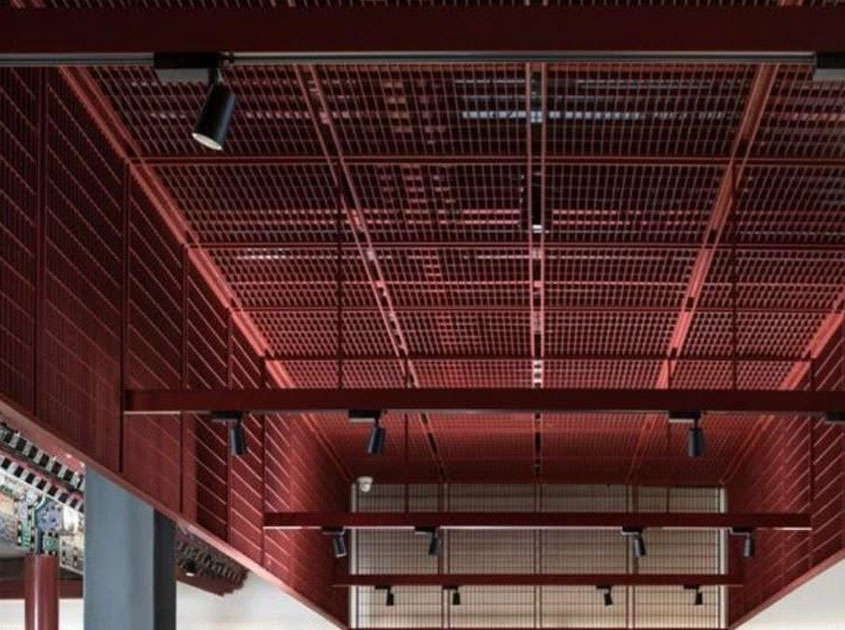
Decorative wire mesh has become one of the most popular architectural and interior design materials in global construction markets. It is widely used in facades, ceilings, partitions, railings, screens, cladding, and luxury interior decoration.
For architects, developers, and importers, one of the most frequently asked questions is:
“What are the common sizes of decorative wire mesh?”

Understanding standard sizes helps buyers select the right product, control costs, and simplify installation. In this guide, we explain the most widely used sizes of decorative wire mesh for international construction projects.
1. Why Decorative Wire Mesh Size Matters
Unlike industrial wire mesh, decorative wire mesh is:
Highly visible
Part of the architectural design
Often custom-installed
The wrong size can cause:
Material waste
Installation delays
Structural mismatches
Visual distortion
Choosing standard sizes improves:
Design accuracy
Fabrication speed
Shipping efficiency
Overall project cost control
2. Common Wire Diameter (Wire Thickness)
The wire diameter determines strength, appearance, and durability.
Application Common Wire Diameter
Interior decorative panels 0.8 – 1.5 mm
Ceiling & partitions 1.2 – 2.0 mm
Facades & sunshades 1.5 – 3.0 mm
Railings & safety screens 2.0 – 4.0 mm
Thicker wire provides more structural strength, while thinner wire offers a lighter and more elegant visual effect.
3. Common Mesh Opening Sizes
Mesh opening (also called aperture) controls transparency and airflow.
Design Style Common Openings
High transparency 10 – 30 mm
Balanced view & shading 5 – 15 mm
Privacy & sun control 2 – 8 mm
Decorative texture 1 – 5 mm
Larger openings allow more light and airflow. Smaller openings provide shading, privacy, and visual depth.
4. Standard Panel Sizes
Most decorative wire mesh is supplied in flat panels or sheets.
Common export sizes include:
1000 × 2000 mm
1200 × 2400 mm
1500 × 3000 mm
2000 × 3000 mm
These sizes match international architectural module standards and fit most frame systems and curtain wall structures.
5. Common Roll Sizes
Flexible woven mesh is often supplied in rolls.
Typical roll widths:
1.0 m
1.2 m
1.5 m
2.0 m
Roll lengths:
10 m
15 m
30 m
Custom lengths
Rolls are ideal for curtain systems, ceilings, and continuous facades.
6. Thickness of Decorative Mesh Panels
Panel thickness includes wire diameter plus weaving structure.
Common thickness ranges:
2 – 4 mm for interior decoration
4 – 8 mm for partitions and screens
8 – 15 mm for exterior facades
Thicker panels provide better wind resistance and durability for outdoor use.
7. Custom Sizes for Architectural Projects
While standard sizes are common, most architectural projects require customization.
Manufacturers in China can provide:
Custom panel dimensions
Pre-cut shapes
Framed mesh systems
Project-specific modules
This allows architects and contractors to achieve perfect fit and visual harmony.
8. How to Choose the Right Size
When selecting decorative wire mesh size, buyers should consider:
Installation location (interior or exterior)
Wind load and safety requirements
Design transparency
Frame system
Transport and handling limits
A professional manufacturer will help you calculate the best size for both performance and cost efficiency.
Final Conclusion
Decorative wire mesh is a flexible and modern architectural material, but size selection is critical for successful projects.
The most common sizes include:
Wire diameters from 0.8 mm to 4.0 mm
Mesh openings from 1 mm to 30 mm
Panels up to 2000 × 3000 mm
Rolls up to 2 m width and 30 m length
With standard sizes plus full customization capability, Chinese manufacturers provide global architects, developers, and contractors with reliable decorative wire mesh solutions for every application.
pre:What Are the Common Packing Methods for Architectural Woven Mesh Export?
next:How to Select Architectural Wire Mesh for Middle East Applications
© 2026 Joinwin Architectural Wire. All Rights Reserved. | Sitemap

Recommended Read
Woven Metal Interiors Price Per Square Meter / Roll: A Complete Buying Guide
CE Standards for Decorative Wire Mesh: What Buyers Should Know
What Is Architectural Wire Mesh Used For?